
Permanent magnets are the silent workhorses of the modern world, integral to everything from simple refrigerator doors to advanced electric vehicles. Unlike electromagnets, which require a continuous flow of electricity to generate a magnetic field, a permanent magnet retains its magnetism after being initially magnetized. But what materials possess this remarkable ability? The answer lies in a fascinating journey through metallurgy and material science, focusing on four primary material families, each with unique composition and performance characteristics.
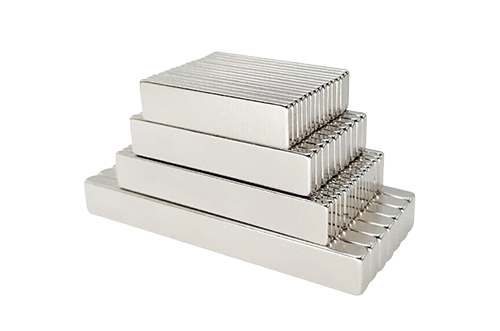
1. The Rare Earth Giants: Neodymium & Samarium Cobalt
The development of rare earth magnets in the 1970s and 80s revolutionized the magnet industry. They offer the highest magnetic performance, making them essential for high-tech, space-constrained applications.
A. Neodymium Iron Boron (NdFeB)
NdFeB magnets are the strongest permanent magnets currently available. Their incredible power-to-weight ratio has made them indispensable in consumer electronics, automotive parts, and green energy technology.
Composition: Primarily an alloy of Neodymium (Nd), Iron (Fe), and Boron (B). The specific crystal structure, Nd2Fe14B, is what gives them their exceptional strength.
Additives: Small amounts of other elements like Dysprosium (Dy) or Terbium (Tb) are often added to enhance the magnet's resistance to demagnetization at higher temperatures.
Key Advantage: Highest magnetic energy product (power) among all commercial magnets.
Drawback: Prone to corrosion and generally have a lower maximum operating temperature than Samarium Cobalt.
B. Samarium Cobalt (SmCo)
SmCo magnets were the first commercially viable rare earth permanent magnets. While not as strong as NdFeB, they excel in harsh environments.
Composition: An alloy primarily of Samarium (Sm) and Cobalt (Co), often categorized into two main groups: SmCo5 (1:5 series) and Sm2Co17 (2:17 series), with the latter sometimes including Iron, Copper, and Zirconium for greater thermal stability.
Key Advantage: Excellent thermal stability and high resistance to corrosion, capable of operating at temperatures up to 350°C.
Use Cases: Aerospace, high-performance motors, and military applications where stability in extreme conditions is paramount.
2. Alnico: The High-Temperature Champions
Before the rare earth magnets, Alnico was the strongest permanent magnet on the market. While surpassed in magnetic strength, they remain crucial in applications demanding high temperature tolerance.
Composition: An alloy based on Aluminum (Al), Nickel (Ni), and Cobalt (Co), with Iron (Fe) forming the base and small additions of Copper (Cu) and sometimes Titanium (Ti).
Key Advantage: Very high working temperature, with some grades maintaining useful magnetism up to 550°C or more.
Manufacturing: Typically produced by casting or sintering, which contributes to their hardness and brittleness.
Use Cases: Sensors, guitar pickups, and applications in extreme heat where other magnets would lose their magnetic properties.
3. Ferrite (Ceramic) - The Cost-Effective Solution
Also known as ceramic magnets, Ferrite magnets are the most commonly produced and least expensive type of permanent magnet. They are an ideal choice for high-volume, cost-sensitive applications that don't require extreme magnetic strength.
Composition: Primarily composed of Iron Oxide ( Fe₂O₃ ) combined with either Strontium Carbonate ( SrCO₃ ) or Barium Carbonate ( BaCO₃ ) to form a crystalline structure like Strontium Hexaferrite ( SrFe₁₂O₁₉ ).
Key Advantage: Excellent resistance to corrosion (requiring no coating) and a very low cost due to the abundance of their raw materials. They also have good demagnetization resistance.
Drawback: Significantly lower magnetic strength compared to rare earth magnets and are physically brittle.
Use Cases: Loudspeakers, magnetic separation tools, toys, and simple electric motors.
4. Flexible Magnets
While technically a composite, flexible magnets are a vital category for non-structural, low-strength applications.
Composition: Fine powder of Ferrite material (often Fe₂O₃) embedded in a flexible binder, such as PVC or rubber polymers.
Key Advantage: Highly flexible, easy to cut, and can be manufactured into sheets, strips, and rolls.
Use Cases: Refrigerator magnets, magnetic signage for vehicles, and magnetic seals.
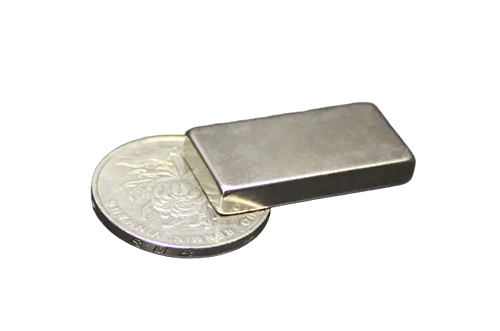
The choice of material for a permanent magnet is always a balance between four key factors: magnetic strength, resistance to demagnetization (coercivity), temperature stability, and cost. From the unparalleled power of NdFeB magnets to the thermal resilience of Alnico and the affordability of Ferrite, the world of permanent magnetism relies on a diverse and strategically chosen set of materials to power modern technology.
Topping
Contact

We will contact you within 24 hours. ( WhatsApp/facebook:+86 15957855637)