
Permanent magnets are fundamental components in countless devices we use every day, generating persistent magnetic fields without needing a continuous external power source. From the motors in electric cars to the speakers in our phones, these materials drive modern innovation. While the principles of magnetism are universal, the materials used to create them vary dramatically, leading to five main commercial types, each optimized for specific applications based on strength, temperature tolerance, and cost.
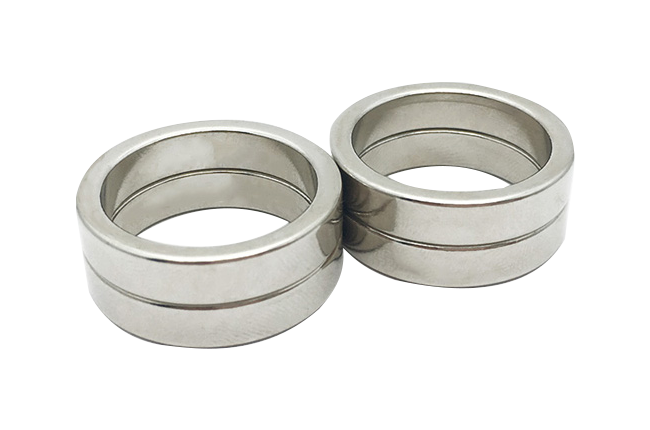
1. Neodymium Iron Boron (NdFeB) Magnets
These are the titans of the magnet world. As a type of rare earth magnet, NdFeB holds the record for the highest magnetic energy product, making them the strongest permanent magnets available today.
Composition: An alloy of Neodymium (Nd), Iron (Fe), and Boron (B).
Key Characteristic: Unmatched magnetic strength in a small volume. This strength comes from the unique crystal structure of the Nd2Fe14B compound.
Best For: Applications requiring extreme power and small size, such as high-performance motors, hard drives, and portable electronics.
Limitation: They have poor corrosion resistance and their performance degrades rapidly above 200°C unless expensive heavy rare earth elements like Dysprosium are added.
2. Samarium Cobalt (SmCo) Magnets
The second type of rare earth permanent magnet, Samarium Cobalt offers a superb combination of high magnetic strength and exceptional temperature stability.
Composition: An alloy of Samarium (Sm) and Cobalt (Co). There are two main families: SmCo5 (1:5 series) and Sm2Co17 (2:17 series).
Key Characteristic: Excellent resistance to demagnetization and high operating temperatures, often up to 350°C. They also have outstanding corrosion resistance.
Best For: Applications in extreme or sensitive environments, including aerospace systems, medical devices (MRI), and high-reliability sensors.
Limitation: Generally weaker than NdFeB and more expensive due to the high cost of Cobalt and the complex manufacturing process.
3. Alnico Magnets
Before the advent of rare earth magnets, Alnico was the strongest material available. Today, they remain relevant for their impressive thermal stability and high magnetic flux density.
Composition: An alloy primarily containing Aluminum, Nickel, and Cobalt, with Iron and other elements like Copper and Titanium.
Key Characteristic: Very high maximum operating temperature, often exceeding 500°C and high resistance to external demagnetizing fields.
Best For: High-temperature applications such as furnace instruments, sensor systems, and classic industrial magnets and meters.
Limitation: They have a relatively low coercivity (resistance to demagnetization from internal factors) and are prone to demagnetization if not handled carefully.
4. Ferrite (Ceramic) Magnets
Also known as ceramic magnets, Ferrites are the most widely produced and cost-effective type of permanent magnet globally.
Composition: Primarily composed of Iron Oxide (Fe₂O₃) combined with either Strontium or Barium Carbonate.
Key Characteristic: Extremely low cost, excellent corrosion resistance (they do not rust), and good demagnetization resistance.
Best For: High-volume, budget-conscious applications where high power is not critical, such as refrigerator magnets, loudspeakers, magnetic separation equipment, and toys.
Limitation: They have the lowest magnetic strength of the four main types and are very brittle.
5. Flexible Magnets
While technically a composite rather than a distinct alloy, flexible magnets are a major commercial category of permanent magnets.
Composition: Fine powder of Ferrite material embedded in a flexible polymer or rubber binder (like PVC or nitrile rubber).
Key Characteristic: High flexibility and ease of manufacturing into long strips, sheets, and custom-cut shapes.
Best For: Signage, magnetic seals for doors and windows, craft supplies, and simple holding applications where low magnetic strength is acceptable.
Limitation: The lowest magnetic strength and energy product of all commercial permanent magnets.
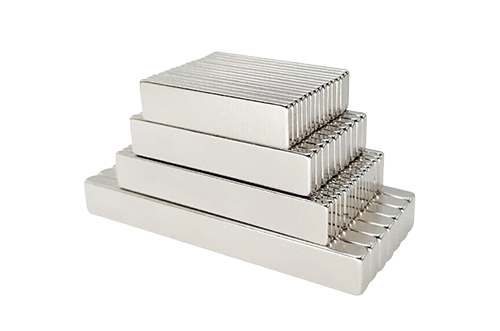
Summary of Selection Factors
Choosing the right permanent magnet involves balancing performance needs with environmental constraints and budget. Whether it’s the intense power of NdFeB, the rugged thermal stability of SmCo, the high-temperature resilience of Alnico, the low-cost bulk of Ferrite, or the versatile shape of Flexible magnets, each material family plays a crucial role in enabling a vast array of modern technology.
Topping
Contact

We will contact you within 24 hours. ( WhatsApp/facebook:+86 15957855637)