
Permanent magnets are marvels of material science, retaining their magnetic field long after they have been exposed to an external magnetizing force. But their exceptional properties are not accidental; they are the result of highly precise, multi-step manufacturing processes. While different magnet types—from Ferrite to Alnico—have variations, the highest-performance magnets, such as Neodymium Iron Boron (NdFeB) and Samarium Cobalt (SmCo), are primarily created through a specialized technique called Powder Metallurgy.
Here is a step-by-step breakdown of how high-performance permanent magnets are typically manufactured.
1. Material Selection and Alloying
The process begins with the careful selection of high-purity raw materials. For NdFeB magnets, this means Neodymium, Iron, and Boron, often with trace additives like Dysprosium to boost coercivity (resistance to demagnetization).
Smelting and Casting: The chosen elements are melted together in a vacuum induction furnace at extremely high temperatures (often exceeding 1600°C) to form a homogeneous alloy. This molten alloy is then rapidly cooled, often by strip casting onto a cold roller, to form ingots or flakes with a fine, desirable microstructure.
Purpose: This step ensures the correct chemical composition and forms the basic crystalline structure necessary for strong magnetism.
2. Powder Preparation
The solidified alloy must be reduced to a fine powder, where each tiny particle acts as a potential magnetic domain.
Crushing and Milling: The alloy flakes are initially crushed and then subjected to sophisticated milling techniques, such as jet milling or hydrogen decrepitation (a process where hydrogen gas breaks the material apart).
Requirement: The resulting powder must be incredibly fine (typically 3-4 micrometers or less) and handled in an inert atmosphere (like Argon or Nitrogen) to prevent rapid oxidation, which can ruin the material's magnetic potential.
3. Orientation and Compacting (The Crucial Step)
This is the key stage where the material is prepared to become an anisotropic (directionally magnetized) permanent magnet.
Magnetic Alignment: The fine magnetic powder is placed into a mold. While the powder is still loose, a strong external magnetic field is applied. This field forces the magnetic axes of the individual powder particles to rotate and align parallel to the applied field.
Pressing: While still held under this magnetic field, the powder is compacted into a dense, solid shape, known as a 'green' magnet. Common methods include die pressing or isostatic pressing (where pressure is applied uniformly from all directions). This alignment and compaction process locks the particles in the preferred magnetic direction, maximizing the eventual strength of the magnet.
4. Sintering and Heat Treatment
Sintering is the process that transforms the fragile 'green' compact into a dense, durable solid.
Sintering: The compressed block is heated in a furnace (in a protective atmosphere) to a temperature just below the melting point (e.g., 1050°C to 1180°C for NdFeB). The high temperature causes the powder particles to fuse together, eliminating most of the air gaps and significantly increasing the material's density (often to over 95% of theoretical density). This process results in a volumetric shrinkage of about 50%.
Annealing (Tempering): Further heat treatments are applied to refine the microstructure, relieve internal stresses, and finalize the intrinsic magnetic properties, especially the coercivity and stability.
5. Finishing, Coating, and Magnetization
The sintered blocks are hard, brittle, and often oxidized on the surface.
Machining: The blocks are ground, sliced, and shaped to the final dimensions and tolerance using precision tools, often diamond-plated cutters, due to the material's hardness.
Coating: Materials like NdFeB are chemically active and highly prone to corrosion. They are typically protected with a thin, durable coating, such as Nickel-Copper-Nickel plating or Zinc.
Magnetization: In the final step, the finished magnet is placed inside a powerful solenoid coil and subjected to an intense magnetic pulse (a field often three times stronger than the magnet's final required coercivity). This pulse permanently aligns the internal magnetic domains, activating the permanent magnet's full power.
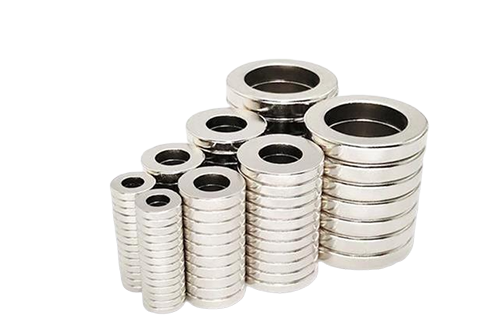
This multi-stage process ensures that the finished permanent magnets exhibit the high strength and stability required for their demanding roles in technology, from electric vehicles to medical equipment.
Topping
Contact

We will contact you within 24 hours. ( WhatsApp/facebook:+86 15957855637)