
Magnets play a crucial role in modern technology, from consumer electronics to industrial equipment. Among the many types available, neodymium magnets and ferrite magnets are the most widely used. While both serve the same fundamental purpose, their properties, performance, and applications differ significantly. Understanding these differences can help you choose the right magnet for your specific needs.
1. Material Composition
The primary difference between neodymium and ferrite magnets lies in their raw materials.
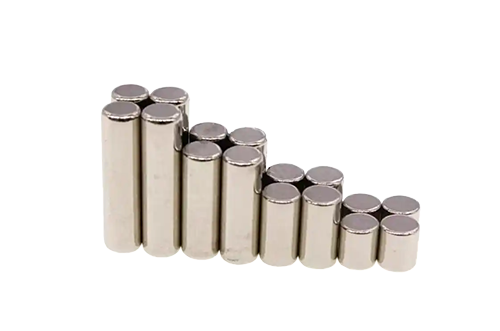
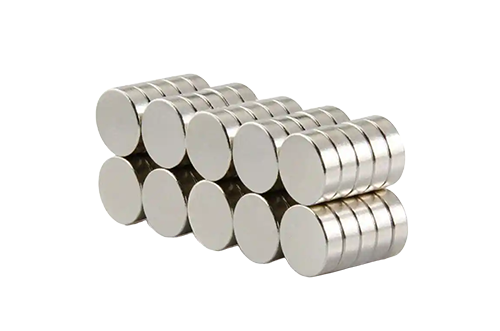
Neodymium magnets, also known as NdFeB magnets, are made from an alloy of neodymium, iron, and boron. This composition gives them exceptional magnetic strength relative to their size.
Ferrite magnets, sometimes called ceramic magnets, are made from iron oxide combined with strontium or barium carbonate. Their simpler composition makes them more affordable and chemically stable, but less powerful.
2. Magnetic Strength
When it comes to strength, neodymium magnets are the clear winner. They are the strongest permanent magnets available today and can produce a very strong magnetic field even in small dimensions.
Ferrite magnets are much weaker by comparison. To achieve the same holding force as a neodymium magnet, a ferrite magnet must be significantly larger. This is why ferrite magnets are often used in applications where size and weight are not critical.
In flexible magnetic products like Rubber Magnets, ferrite magnetic powder is commonly embedded into rubber or plastic binders. While these magnets are not as strong as solid neodymium magnets, they offer excellent flexibility and versatility for everyday use.
3. Durability and Temperature Resistance
Ferrite magnets have excellent resistance to corrosion and can perform well in humid or outdoor environments without additional coatings. They also maintain stable performance at higher temperatures, making them suitable for motors, speakers, and industrial settings.
Neodymium magnets, on the other hand, are more sensitive to heat and corrosion. Most require protective coatings such as nickel, zinc, or epoxy to prevent rust and extend their service life.
4. Cost and Availability
Cost is another important factor. Ferrite magnets are inexpensive due to low material costs and simple manufacturing processes. This makes them ideal for mass-produced products, including refrigerator magnets, toys, and promotional Rubber Magnets.
Neodymium magnets are more expensive because of the rare earth elements involved and more complex production requirements. However, their superior strength often justifies the higher price in high-performance applications.
5. Typical Applications
Neodymium magnets are commonly used in:
Electric motors and generators
Medical equipment
Hard drives and high-end electronics
Precision industrial devices
Ferrite magnets are widely used in:
Loudspeakers and small motors
Magnetic separators
Educational products
Flexible magnetic products such as Rubber Magnets for advertising, labeling, and signage
Conclusion
In summary, the difference between neodymium and ferrite magnets comes down to strength, cost, durability, and application requirements. Neodymium magnets offer unmatched magnetic power in compact sizes, while ferrite magnets provide a cost-effective, stable solution for everyday and flexible magnetic applications. Products like Rubber Magnets highlight how ferrite materials can be adapted for practical, user-friendly designs where flexibility and affordability matter more than maximum strength.
Choosing the right magnet depends on balancing performance needs with environmental conditions and budget considerations.
Topping
Contact

We will contact you within 24 hours. ( WhatsApp/facebook:+86 15957855637)