
Magnets play a critical role in modern science, industry, and everyday life. From powering electric vehicles to enabling advanced medical imaging, the strength of modern magnets continues to redefine what technology can achieve. But not all magnets are created equal. Some are vastly more powerful than others, capable of generating extraordinary magnetic forces.

Below, we explore the five strongest magnets in the world, explaining what makes them unique and why they matter today.
1. Neodymium Magnets (NdFeB)
Neodymium magnets are widely recognized as the strongest permanent magnets available commercially. Made from an alloy of neodymium, iron, and boron, these magnets can produce an extremely high magnetic field relative to their size.
They are commonly used in electric motors, wind turbines, headphones, and hard drives. Despite their compact form, neodymium magnets outperform most other magnets by a significant margin, making them essential in high-performance applications.
2. Samarium Cobalt Magnets (SmCo)
Samarium cobalt magnets rank among the strongest magnets while offering exceptional resistance to high temperatures and corrosion. Although slightly weaker than neodymium magnets, they maintain their magnetic strength in extreme environments where other magnets fail.
These magnets are widely used in aerospace, military systems, and high-temperature industrial equipment, where reliability is more important than cost.
3. Superconducting Electromagnets
Superconducting electromagnets are not permanent magnets, but they can generate the strongest magnetic fields ever created on Earth. By using superconducting coils cooled to extremely low temperatures, these magnets produce immense magnetic forces with minimal energy loss.
They are essential in MRI machines, particle accelerators, and fusion energy research. In scientific laboratories, superconducting magnets can reach field strengths millions of times stronger than Earth’s natural magnetic field.
4. Bitter Electromagnets
Bitter electromagnets are specially designed water-cooled magnets capable of producing ultra-high magnetic fields. Unlike traditional wire coils, they use stacked metal plates with cooling channels to withstand enormous electrical currents.
These powerful magnets are primarily used in advanced physics research, where precise control of extremely strong magnetic fields is required for experimental studies.
5. Hybrid Magnets
Hybrid magnets combine superconducting magnets with resistive electromagnets, achieving record-breaking magnetic field strengths. By merging two magnet technologies, scientists can push magnetic performance beyond previous limits.
These magnets are found in national research facilities and are used to study material science, quantum physics, and extreme-state matter. Hybrid systems represent the cutting edge of magnet research.
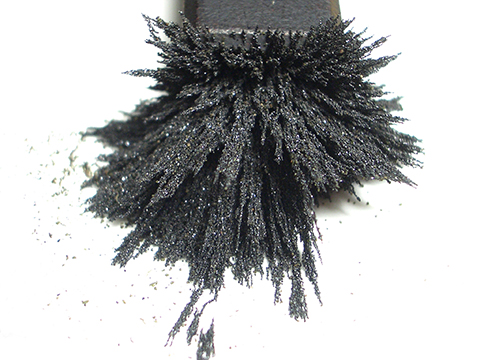
Why Strong Magnets Matter
The continuous development of stronger magnets is driving innovation across industries. From renewable energy and transportation to healthcare and scientific discovery, magnets are at the core of many technologies shaping the future.
As research advances, the demand for stronger, more efficient, and more durable magnets will only continue to grow—unlocking new possibilities that were once considered impossible.
Topping
Contact

We will contact you within 24 hours. ( WhatsApp/facebook:+86 15957855637)