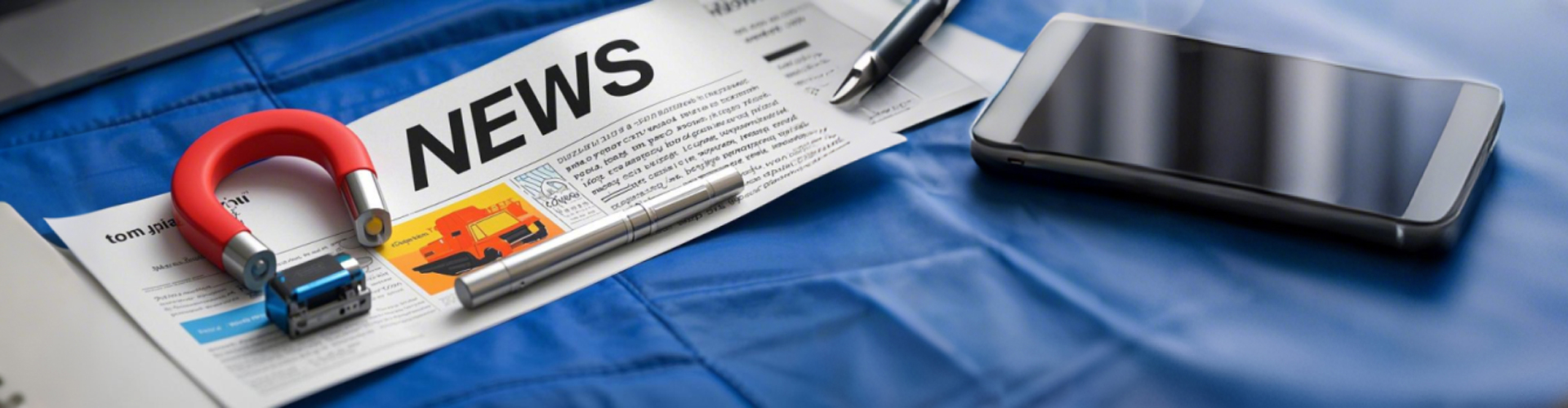
NdFeB Magnets, also known as neodymium magnets, are among the strongest permanent magnets available today. They are widely used in electric motors, wind turbines, consumer electronics, medical devices, and many other high-performance applications. Despite their impressive magnetic strength, NdFeB Magnets are not immune to degradation. Over time, several factors can weaken their magnetic performance.
Understanding what causes this loss of strength is essential for engineers, manufacturers, and end users who rely on long-term magnetic stability.
1. Exposure to High Temperatures
Heat is one of the most significant factors that can weaken NdFeB Magnets.
Each neodymium magnet has a maximum operating temperature, typically ranging from 80°C to 230°C, depending on its grade. When the magnet is exposed to temperatures beyond this limit, the magnetic domains inside the material begin to lose alignment.
Temporary demagnetization can occur if the temperature slightly exceeds the rated limit.
Permanent demagnetization may happen if the magnet reaches or surpasses its Curie temperature.
Prolonged exposure to elevated heat, even below the Curie temperature, can gradually reduce magnetic strength over time.
2. Corrosion and Oxidation
NdFeB Magnets are composed primarily of neodymium, iron, and boron. The iron content makes them particularly vulnerable to corrosion, especially in humid or chemically aggressive environments.
If the protective coating (such as nickel, epoxy, or zinc) is damaged or poorly applied:
Moisture can penetrate the magnet
Oxidation can occur
Structural integrity may be compromised
Corrosion not only weakens the physical material but also disrupts the magnetic structure, leading to reduced performance or complete failure.
3. Strong External Magnetic Fields
Exposure to strong opposing magnetic fields can weaken NdFeB Magnets over time.
This commonly occurs when:
Magnets are improperly stored with like poles facing each other
They are placed near powerful electromagnets
They are used in applications with fluctuating magnetic fields
These external forces can disturb the internal magnetic domain alignment, resulting in partial demagnetization.
4. Mechanical Stress and Impact
Although NdFeB Magnets are extremely strong magnetically, they are mechanically brittle.
Mechanical stress such as:
Repeated vibration
Sudden impact
Cracking or chipping
can damage the crystal structure of the magnet. This internal damage can reduce the magnet’s ability to maintain a stable magnetic field, especially in precision applications.
5. Aging and Magnetic Relaxation
Even under ideal conditions, all permanent magnets experience a small amount of magnetic relaxation over time.
For NdFeB Magnets:
Most strength loss occurs shortly after magnetization
The remaining magnetic field typically stabilizes for many years
In high-quality magnets, this long-term loss is usually minimal (often less than a few percent over decades), but it can be more noticeable in lower-grade or poorly manufactured magnets.
6. Poor Magnet Design or Incorrect Grade Selection
Using the wrong grade of NdFeB Magnet for a specific application can accelerate strength loss.
For example:
A low-temperature grade used in a high-heat motor
Insufficient coating in a humid environment
Undersized magnets operating near their maximum limits
Proper design and material selection are critical to maintaining magnetic performance over time.
How to Minimize Strength Loss in NdFeB Magnets
To extend the lifespan and performance of NdFeB Magnets, consider the following best practices:
Select the correct magnet grade for temperature and environment
Use high-quality protective coatings
Avoid mechanical shock and excessive vibration
Store magnets properly, away from strong opposing fields
Ensure proper thermal management in high-power applications
Conclusion
NdFeB Magnets are powerful and reliable, but their strength can weaken over time due to heat, corrosion, external magnetic fields, mechanical stress, and natural aging. By understanding these factors and applying proper design and handling practices, it is possible to significantly extend the useful life of these magnets.
In modern electronics and industrial systems, careful management of NdFeB Magnets is the key to long-term performance, efficiency, and reliability.
Topping
Contact

We will contact you within 24 hours. ( WhatsApp/facebook:+86 15957855637)