
Steel is one of the world's most ubiquitous materials, forming the backbone of modern infrastructure, from skyscrapers and bridges to vehicles and tools. But beyond its strength and versatility, steel possesses another remarkable property: magnetism. While not all steels are magnetic, the ones that are—and they are the majority—owe this characteristic to the fundamental structure of their constituent atoms.
The Atomic Roots of Magnetism
To understand why steel is magnetic, we must delve into the quantum world of electrons. Every atom has electrons orbiting its nucleus, and these electrons possess an inherent property called spin. This spin generates a tiny magnetic field, essentially making every electron a minuscule magnet.
In most materials, these electron spins are randomly oriented, canceling each other out. This results in no net magnetic field—the material is non-magnetic.
However, in certain elements—specifically the transition metals like iron (Fe), nickel (Ni), and cobalt (Co)—something unique happens. These elements are known as ferromagnetic materials.
The Role of Iron and Ferromagnetism
Steel is primarily an alloy of iron and carbon, with iron being the dominant component. Iron is a classic ferromagnetic material. What distinguishes iron (and thus, steel) is a phenomenon called exchange coupling or exchange interaction.
Aligned Spins: Due to quantum mechanical effects, the electron spins in iron atoms, especially in the 3d shell, tend to spontaneously align with their neighbors over short distances. This alignment creates a stronger, collective magnetic moment.
Magnetic Domains: The Crucial Component
If all the atoms in a piece of steel had their magnetic moments perfectly aligned, the steel would be an incredibly powerful, permanent magnet. In reality, the material is divided into microscopic regions called magnetic domains .
Unmagnetized Steel: In a piece of unmagnetized steel, the magnetic moments within each domain are strongly aligned, but the domains themselves are oriented randomly. The magnetic field of one domain cancels out the field of the adjacent domains, resulting in zero net magnetism for the entire piece.
Magnetized Steel: When the steel is exposed to an external magnetic field, the domain walls shift. The domains that are aligned with the external field grow at the expense of the non-aligned domains. When the external field is strong enough, most of the domains are aligned in the same direction, and the steel becomes magnetized.
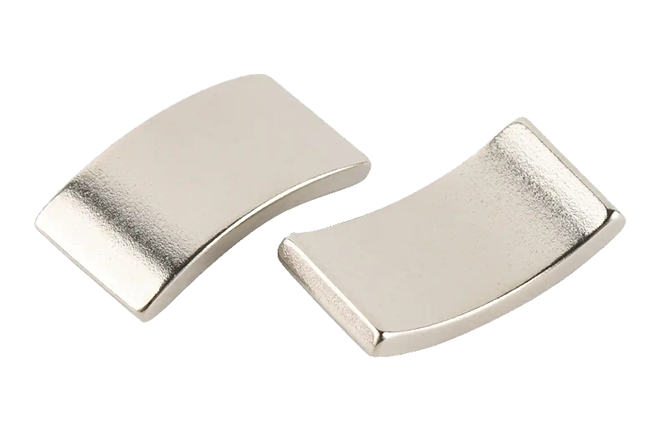
This is the principle behind creating permanent magnets. Steels specifically engineered for this purpose are often referred to as magnet steel.
The Carbon Conundrum: Why Some Steels Aren't Magnetic
The presence of carbon in steel, and how the steel is processed (like quenching and tempering), fundamentally affects its crystalline structure and, consequently, its magnetic properties.
Ferritic and Martensitic Steel (Magnetic): The most common magnetic steels, like standard structural steel and hardened tools, have crystal structures (like ferrite and martensite) that retain the ferromagnetic properties of iron, allowing domain alignment.
Austenitic Stainless Steel (Non-Magnetic): Some high-alloy stainless steels, such as the common 300-series (e.g., 304 and 316), are typically non-magnetic. This is because their high content of elements like chromium and nickel stabilizes an atomic structure known as austenite. The austenitic structure prevents the effective exchange coupling between iron atoms that is required to form strong magnetic domains, thus making the material essentially paramagnetic (only weakly magnetic).
In Summary
The magnetism in steel is fundamentally caused by:
1. Iron: Steel's main ingredient, iron, is a ferromagnetic element.
2. Aligned Electron Spins: Within iron atoms, quantum mechanics forces electron spins to align.
3. Magnetic Domains: These aligned spins create small, strongly magnetic regions that, when oriented in the same direction by an external field, make the entire piece of steel magnetic.

Whether a specific grade of steel is magnetic comes down to the final internal crystal structure, which dictates whether the iron atoms can effectively participate in ferromagnetism. Next time you see a powerful magnet steel in action, you’ll know the amazing atomic physics behind its hidden power!
Topping
Contact

We will contact you within 24 hours. ( WhatsApp/facebook:+86 15957855637)